


PRODUCTS CENTER

Papua New Guinea Construction of seawall and breakwater using 500g geotextile for coastal protection
Category:
Papua New GuineaGeotextile
Product Description
Introduction
Coastal protection geotextile fabric is a crucial tool in the battle against erosion and land loss along shorelines. This durable and permeable fabric is designed to withstand harsh coastal conditions while providing stabilization and reinforcement to the soil. By creating a strong barrier between the water and the land, geotextile fabric helps to prevent erosion, protect infrastructure, and preserve natural habitats.
The woven or non-woven structure of the fabric allows water to pass through while retaining the soil, making it an effective solution for areas with high water flow or wave action. Coastal protection geotextile fabric is used in a variety of applications, including seawalls, revetments, and beach nourishment projects.
With its proven track record in coastal engineering and environmental protection, geotextile fabric is an essential component in sustainable coastal management strategies. By choosing the right geotextile fabric for each specific project, engineers and planners can help to safeguard coastlines and ensure the long-term resilience of coastal ecosystems.
Video Showcase
Applications
Coastal protection geotextiles are widely used in various applications to prevent erosion and promote stability along coastlines. These geotextiles are designed to provide a barrier between soil and water, helping to reinforce the natural environment and protect against the effects of waves, tides, and currents.
One of the primary applications of coastal protection geotextiles is in the construction of seawalls and revetments. These structures are built along the shoreline to prevent erosion and protect coastal properties from damage caused by storm surges and flooding. Geotextiles are used to provide additional support and reinforcement to these structures, helping to ensure their long-term stability and effectiveness.
Another common application of coastal protection geotextiles is in the construction of beach nourishment projects. These projects involve adding sand or other materials to eroded beaches to restore their natural profile and protect against future erosion. Geotextiles are used to stabilize the added materials and prevent them from being washed away by waves and currents, helping to create a more resilient and sustainable coastline.
Coastal protection geotextiles are also used in the construction of groynes and breakwaters. Groynes are structures built perpendicular to the shoreline to trap sediment and prevent longshore drift, while breakwaters are offshore structures designed to reduce the force of waves and protect coastal areas from erosion. Geotextiles are used to reinforce these structures and provide additional support, helping to improve their effectiveness in protecting coastlines.
In addition to these applications, coastal protection geotextiles can also be used in the construction of erosion control structures, such as riprap and gabions, as well as in the restoration of wetlands and marshes. By providing a stable and durable barrier between soil and water, geotextiles help to promote the natural ecosystem and prevent further degradation of coastal habitats.
Overall, coastal protection geotextiles play a crucial role in preserving and enhancing coastal environments around the world. Their versatile applications and effectiveness in preventing erosion make them an essential tool for coastal engineers and environmental professionals working to protect our coastlines for future generations.
Working Drawing
 |
 |
 |
 |
Specifications
Filament non-woven geotextile
| Properties | Test Method | Unit | PETNW150 | PETNW200 | PETNW250 | PETNW300 | PETNW350 | PETNW400 | PETNW500 | PETNW600 |
| Tensile Strength (MD/TD) | ASTM D4595 | kN/m | 9.5 | 13 | 17 | 19 | 23 | 26 | 34 | 38 |
| Tensile Elongation (MD/TD) | ASTM D4595 | % | 50 | 60 | 60 | 60 | 60 | 60 | 60 | 60 |
| Grab Tensile Strength (MD/TD) | ASTM D4632 | N | 550 | 730 | 1000 | 1100 | 1400 | 1700 | 2000 | 2500 |
| Grab Elongation (MD/TD) | ASTM D4632 | % | 50 | 50 | 60 | 60 | 60 | 60 | 60 | 60 |
| Trapezoidal Tear Strength (MD/TD) | ASTM D4533 | N | 270 | 330 | 430 | 450 | 540 | 610 | 770 | 900 |
| CBR Burst Strength | ASTM D6241 | N | 1800 | 2300 | 2800 | 3200 | 3600 | 4500 | 6000 | 7000 |
| Pore Size O90 | ASTM D4751 | µm | 110 | 110 | 100 | 100 | 90 | 80 | 70 | 70 |
| Water Flow Q100 | ASTM D4491 | L/m2/s | 235 | 210 | 190 | 170 | 160 | 125 | 100 | 80 |
| U.V. Resistance | ASTM D4355 | %@500h | 70 | 70 | 70 | 70 | 70 | 70 | 70 | 70 |
| Thickness | ASTM D5199 | mm | 1.2 | 1.6 | 1.9 | 2.2 | 2.5 | 2.8 | 3.4 | 4.2 |
| Weight | ASTM D5261 | g/m2 | 150 | 200 | 250 | 300 | 350 | 400 | 500 | 600 |
| Roll Width | - | m | 6 | 6 | 6 | 6 | 6 | 6 | 6 | 6 |
| Roll Length | - | m | 250 | 150 | 150 | 100 | 100 | 100 | 75 | 50 |
Short non-woven geotextile
|
Product Name |
Non woven geotextile |
|
Weight |
80-800g/m2 |
|
Colour |
Colour |
|
Width |
1-6m |
|
Length |
50-300m |
|
Standard |
ASTM, ISO |
|
Package |
Standard or Customized |
Pack and Ship
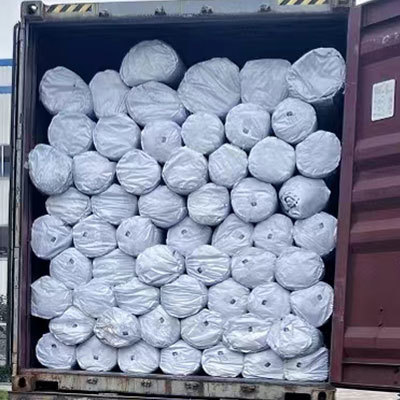
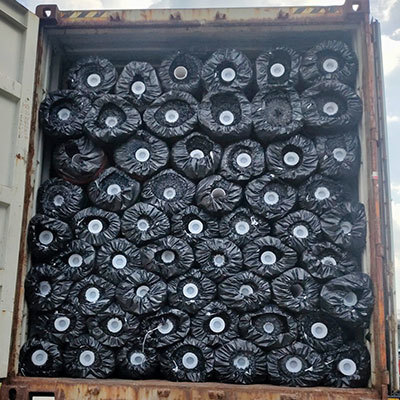
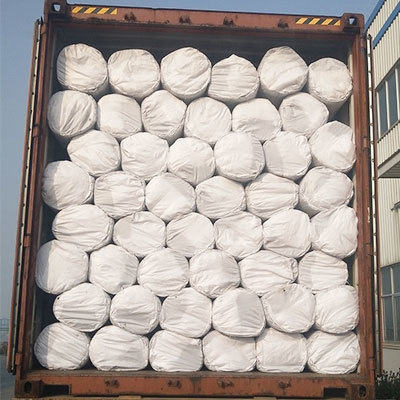
Packaging: Standard packaging or customer's requirements
Lead time: Within 10-15 days after receiving the deposit payment
Producing Capacity: Two 40ft Containers per week
 |
 |
 |
Our Main Products
Contact Us
Address:No. 366, Industrial Park North Road, Beijipo District, High-tech Zone, Taian City, Shandong Province,China
Get a Free Quote


