

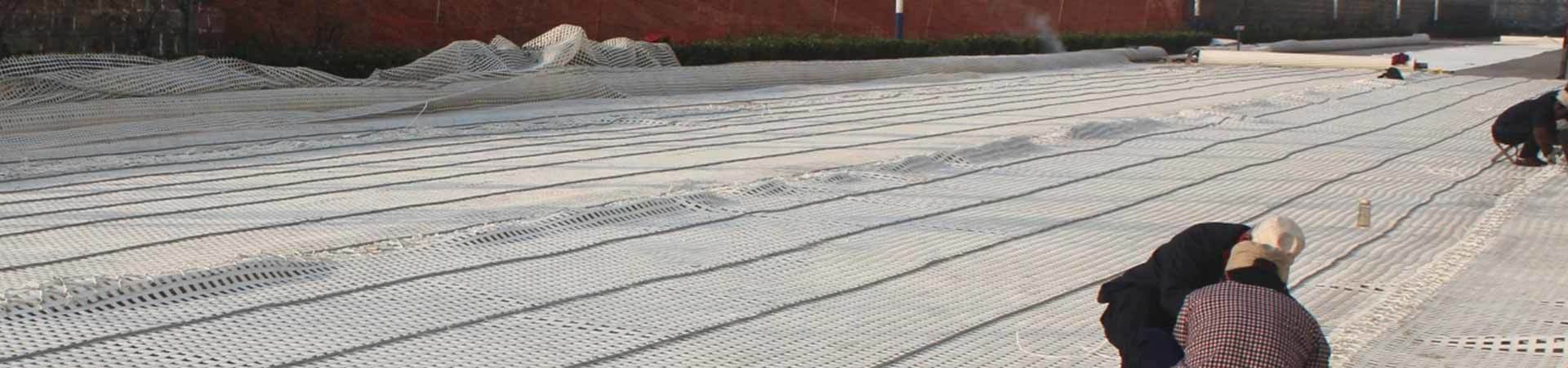
Manufactured from high-quality material: Uniaxial Geogrid
Release Time:
2024-11-18

Uniaxial geogrids are typically made from high-density polyethylene (HDPE) or polypropylene (PP) materials. These materials are known for their high tensile strength, durability, and resistance to environmental factors such as chemicals, UV radiation, and moisture.
The manufacturing process of uniaxial geogrids involves extruding the polymer resin into a flat sheet, then stretching it in the machine direction to orient the polymer chains and create a high-strength, low-elongation geogrid. This process results in a product with excellent tensile strength in one direction, allowing it to effectively reinforce soil, aggregate, and other materials in civil engineering applications.
Uniaxial geogrids are commonly used in road construction, landfills, retaining walls, and other infrastructure projects where soil stabilization and reinforcement are required. They are designed to improve the load-bearing capacity of the soil, reduce settlement, and prevent soil erosion. Additionally, uniaxial geogrids can also be used to facilitate the construction of steep slopes, embankments, and other structures that require additional support.
In conclusion, uniaxial geogrids are manufactured from high-quality polymers such as HDPE or PP, which provide superior strength and durability for a variety of civil engineering applications. Their unique design and construction make them an essential component in many construction projects, offering reliable reinforcement and stabilization for soil and other materials.
Related News
Our Main Products
Contact Us
Address:No. 366, Industrial Park North Road, Beijipo District, High-tech Zone, Taian City, Shandong Province,China
Get a Free Quote


