

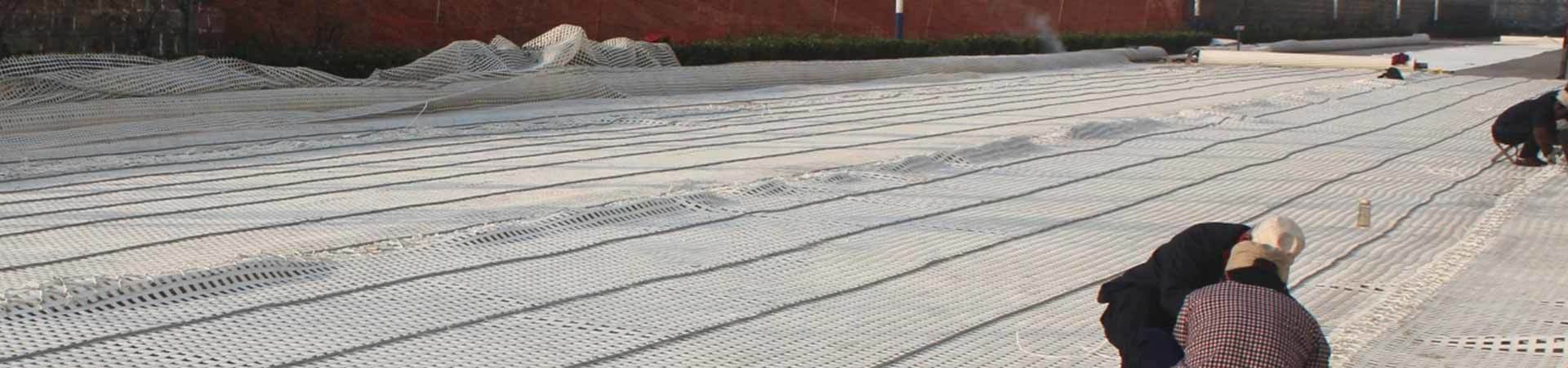
Application and characteristics of composite geogrids
Release Time:
2024-01-24

Application and characteristics of composite geogrids
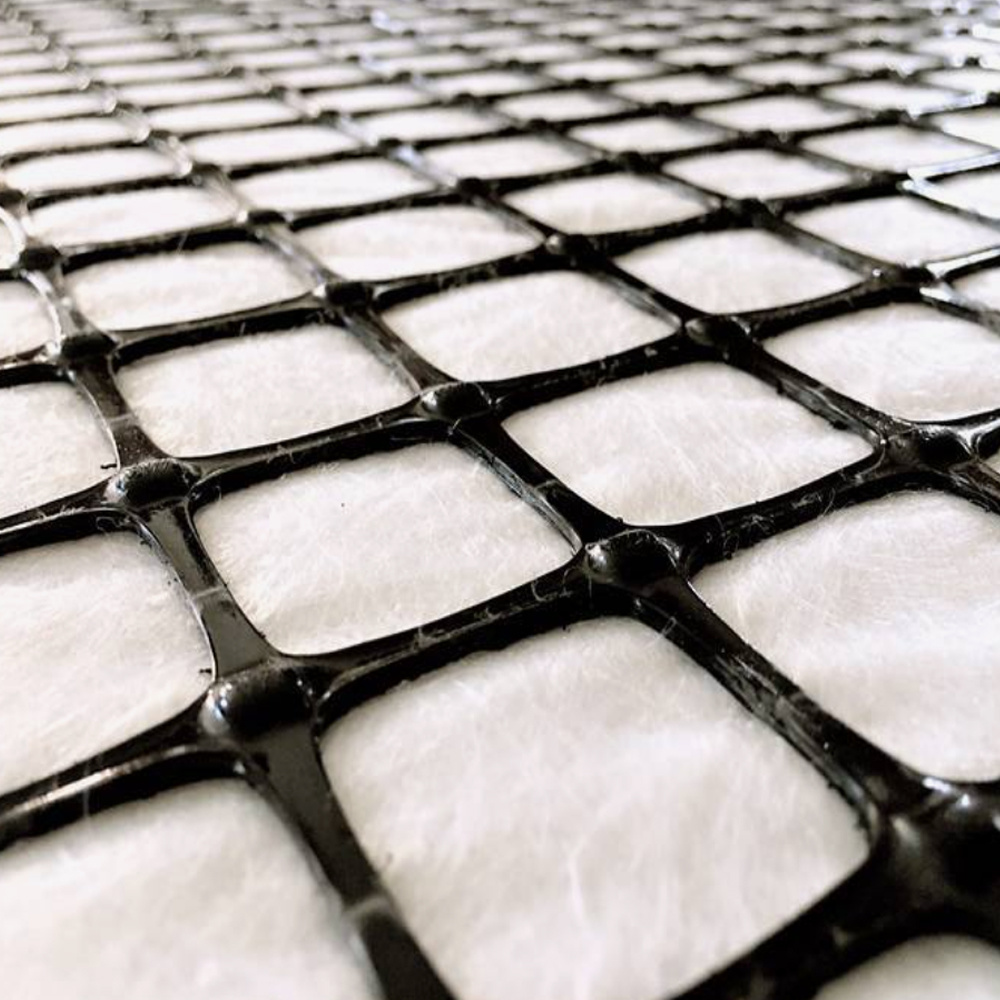
Composite geogrid is a material that enhances soil, composed of polymer materials and geotextiles. Its structure is formed by interweaving horizontal and vertical fibers to form a mesh structure, similar to the shape of a grid.
Composite geogrids have the following main characteristics and applications:
Strengthening soil: Composite geogrids can increase the tensile strength, shear strength, and erosion resistance of soil, and improve the overall stability and bearing capacity of soil.
 |
 |
Distributed load: Through force transmission, composite geogrids can disperse the load into the soil, reducing settlement and deformation of the soil.
Preventing landslides and surface erosion: Composite geogrids can be applied to soil structures such as slopes and embankments to increase the soil's anti slip ability and prevent landslides from occurring. At the same time, it can also effectively resist surface erosion such as wind erosion, water erosion, and wave impact.
Permeable drainage and anti-seepage: Composite geogrids have a certain degree of permeability, which can promote the drainage of water inside the soil and reduce the risk of soil liquefaction and leakage.
 |
 |
Applied to roadbed and railway engineering: Composite geogrids are widely used in basic engineering such as highways and railways to enhance and reinforce roadbed soil, improve the bearing capacity and stability of the roadbed.
In summary, composite geogrids are an important civil engineering material. By increasing the strength and stability of soil, they can achieve reinforcement and strengthening of soil engineering, and improve the safety and reliability of soil structures.
Previous:
Related News
Our Main Products
Contact Us
Address:No. 366, Industrial Park North Road, Beijipo District, High-tech Zone, Taian City, Shandong Province,China
Get a Free Quote


