

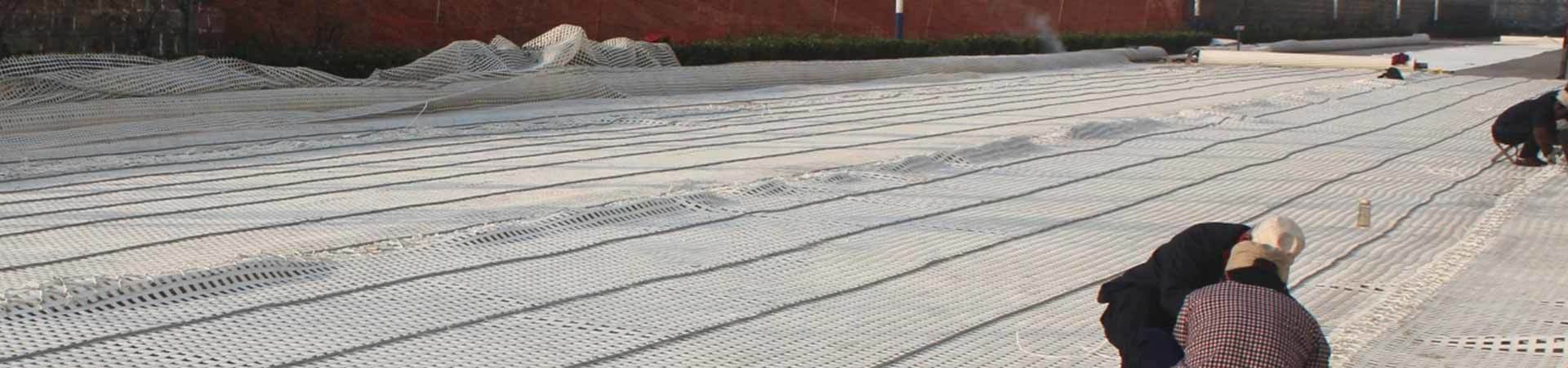
Understanding the features and uses of composite drainage systems
Release Time:
2024-03-02

Composite drainage network is a drainage material with unique structure and diverse functions, which has the following characteristics:
- Multifunctionality: The composite drainage network combines multiple functions such as drainage, filtration, protection, isolation, etc., and can meet the needs of different engineering environments.
- High drainage performance: With excellent drainage performance, it can quickly guide water to the drainage outlet, effectively avoiding problems caused by water accumulation.
- High compressive strength: The composite drainage network material is sturdy and durable, with strong compressive capacity, and can withstand large load pressures.
- Strong corrosion resistance: It has good corrosion resistance, acid and alkali resistance, and can be used stably for a long time under different environmental conditions.
 |
 |
 |
 |
- Preventing soil erosion: In land engineering, composite drainage networks can be used to prevent soil erosion and slope erosion, protect the foundation soil from erosion, and maintain surface stability.
- Greening engineering: Composite drainage networks can also be used as soil improvement materials in greening engineering, providing sufficient air, water, and nutrient supply, promoting plant growth, and improving the green environment.
- Road engineering: In road engineering, composite drainage networks can be used for the reinforcement and drainage of road base and roadbed, improving the bearing capacity and water resistance stability of the road.
In summary, composite drainage networks have a wide range of applications in fields such as land engineering, water conservancy engineering, greening engineering, road engineering, etc. They can play functions such as drainage, anti-seepage, and soil protection, improving the reliability and stability of engineering.
Related News
Our Main Products
Contact Us
Address:No. 366, Industrial Park North Road, Beijipo District, High-tech Zone, Taian City, Shandong Province,China
Get a Free Quote


