

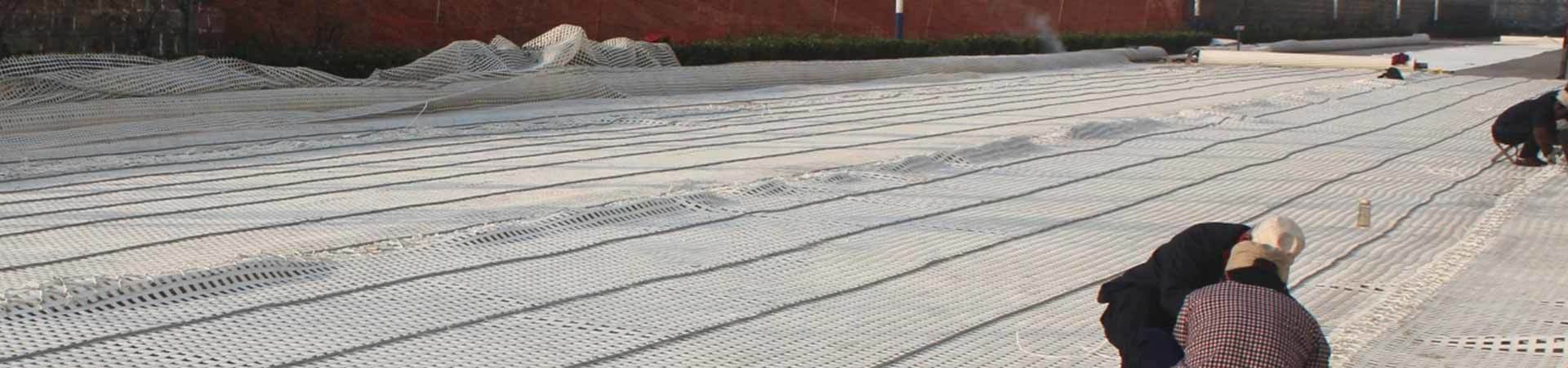
The Wide Range of Application Fields for PPHDPE Uniaxial Geogrid
Release Time:
2024-07-29

HDPE single-axis geogrid is a popular geosynthetic material used in a variety of civil engineering and environmental applications. Its high-density polyethylene composition provides excellent strength, durability, and resistance to environmental factors, making it ideal for a wide range of applications.
One common application of HDPE single-axis geogrid is in soil stabilization and reinforcement projects. By incorporating geogrids into soil structures, engineers can increase the stability and load-bearing capacity of the soil, allowing for the construction of roads, embankments, and retaining walls in challenging terrains. The geogrids help to distribute loads more evenly, preventing soil erosion and settlement over time.
Another key application of HDPE single-axis geogrid is in the reinforcement of slopes and slopes. When installed on slopes, geogrids help to stabilize the soil, prevent erosion, and reduce the risk of landslides. This is especially important in areas prone to heavy rainfall or seismic activity, where slope failure can have serious consequences.
In addition, HDPE single-axis geogrid is commonly used in the construction of paved and unpaved roads. By placing geogrids beneath the road surface, engineers can improve the structural integrity of the road, reduce rutting and cracking, and increase its lifespan. This is particularly beneficial in areas with poor soil conditions or heavy traffic loads.
The versatility of HDPE single-axis geogrid also makes it suitable for use in drainage and erosion control applications. By incorporating geogrids into drainage systems, engineers can improve the flow of water, prevent soil erosion, and protect infrastructure from water damage. This is crucial in areas prone to flooding or soil instability.
Overall, HDPE single-axis geogrid is a versatile and effective geosynthetic material that finds applications in a wide range of civil engineering and environmental projects. Its high strength, durability, and flexibility make it an ideal choice for soil stabilization, slope reinforcement, road construction, drainage systems, and erosion control. By incorporating geogrids into their projects, engineers can improve the performance, longevity, and safety of their structures.
Previous:
Related News
Our Main Products
Contact Us
Address:No. 366, Industrial Park North Road, Beijipo District, High-tech Zone, Taian City, Shandong Province,China
Get a Free Quote


