

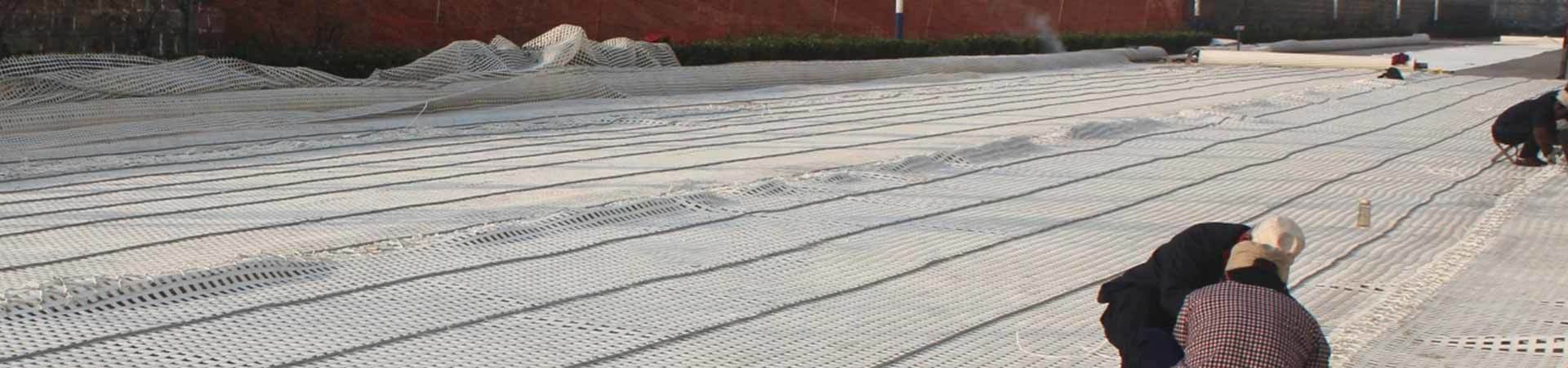
Exploring the applications and benefits of woven geotextile
Release Time:
2024-08-07

Geotextiles are synthetic fabrics that are used in civil engineering and construction projects for various purposes. Woven geotextiles, also known as geotextile fabrics or geotextile grids, are a type of geotextile that is made by weaving polypropylene or polyester fibers together.
Geotextile fabrics are used in a wide range of applications, including road construction, drainage systems, erosion control, and slope stabilization. One of the main functions of woven geotextiles is to provide reinforcement and stabilization to soil. By placing a layer of geotextile fabric between layers of soil, it helps to distribute loads and prevent soil movement, therefore improving the overall stability of the structure.
In addition to reinforcement, geotextiles also have filtration properties. They allow water to pass through while preventing soil particles from washing away. This is particularly useful in drainage systems, where geotextiles can be used to separate different layers of soil and prevent clogging.
Another important function of geotextiles is separation. By placing a geotextile fabric between different layers of soil or other materials, it helps to prevent mixing and maintain the integrity of each layer. This is especially useful in road construction, where geotextiles can separate the subgrade from the base course, reducing the risk of deformation and settlement.
Overall, geotextile fabrics play a crucial role in civil engineering and construction projects by providing reinforcement, filtration, and separation. With their versatility and durability, they have become an essential component in modern infrastructure development.
Related News
Our Main Products
Contact Us
Address:No. 366, Industrial Park North Road, Beijipo District, High-tech Zone, Taian City, Shandong Province,China
Get a Free Quote


