

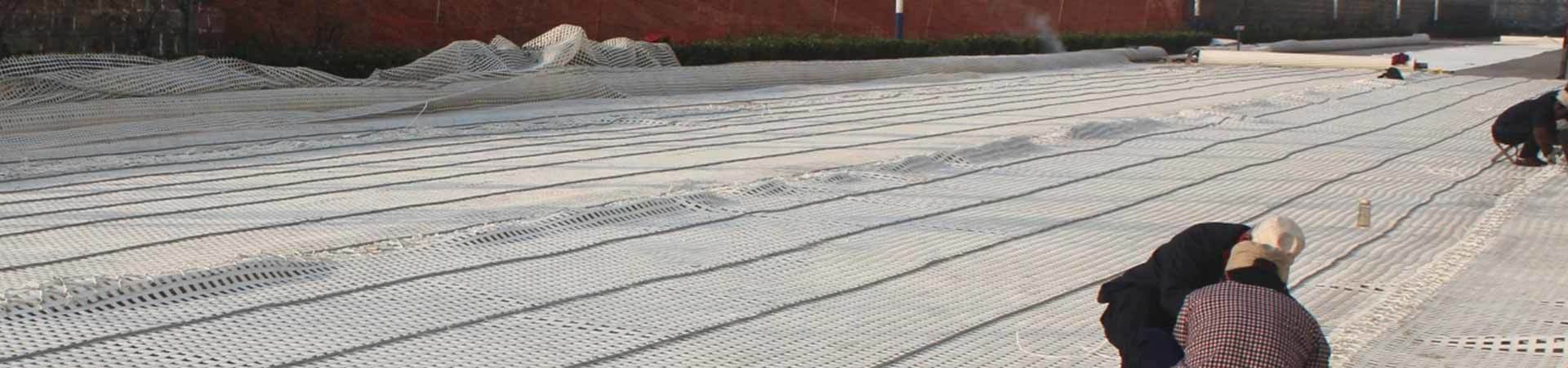
Optimizing the Production Process of Composite Geomembranes
Release Time:
2024-08-30

Composite geomembrane is a type of geosynthetic material that is widely used in various civil engineering projects such as landfill liners, pond liners, and canal liners. The production process of composite geomembrane involves multiple steps to ensure its strength, durability, and impermeability.
The first step in the production of composite geomembrane is the selection of raw materials. The raw materials used in the production of composite geomembrane typically include high-density polyethylene (HDPE) or low-density polyethylene (LDPE) as the base material, along with various additives such as antioxidants, UV stabilizers, and carbon black to enhance its properties.
Once the raw materials are selected, they are mixed together in a specialized extruder machine. The extruder machine melts the raw materials and extrudes them into a flat sheet of geomembrane. This flat sheet is then fed into a calender machine, which applies pressure and heat to the sheet to ensure uniform thickness and smooth surface finish.
After the calendering process, the geomembrane sheet is then laminated with a geotextile or nonwoven fabric layer. This lamination process involves applying a layer of adhesive between the geomembrane and the geotextile fabric, and then passing them through a set of heated rollers to bond them together. The geotextile layer provides additional strength, puncture resistance, and filtration properties to the composite geomembrane.
Once the lamination process is complete, the composite geomembrane undergoes a series of quality control tests to ensure its performance meets industry standards. These tests may include thickness measurement, tensile strength testing, tear resistance testing, and seam strength testing.
Finally, the composite geomembrane is cut into rolls of various sizes and lengths, ready for packaging and distribution to construction sites. The rolls are typically stored in a cool, dry warehouse to prevent damage from UV exposure or moisture before they are installed on-site.
In conclusion, the production process of composite geomembrane is a complex and precise operation that involves selecting high-quality raw materials, extruding and calendering the geomembrane sheet, laminating it with a geotextile layer, conducting quality control tests, and packaging the final product for distribution. This meticulous process ensures that composite geomembrane meets the stringent requirements of civil engineering projects and provides long-lasting protection against water seepage and environmental pollutants.
Related News
Our Main Products
Contact Us
Address:No. 366, Industrial Park North Road, Beijipo District, High-tech Zone, Taian City, Shandong Province,China
Get a Free Quote


