

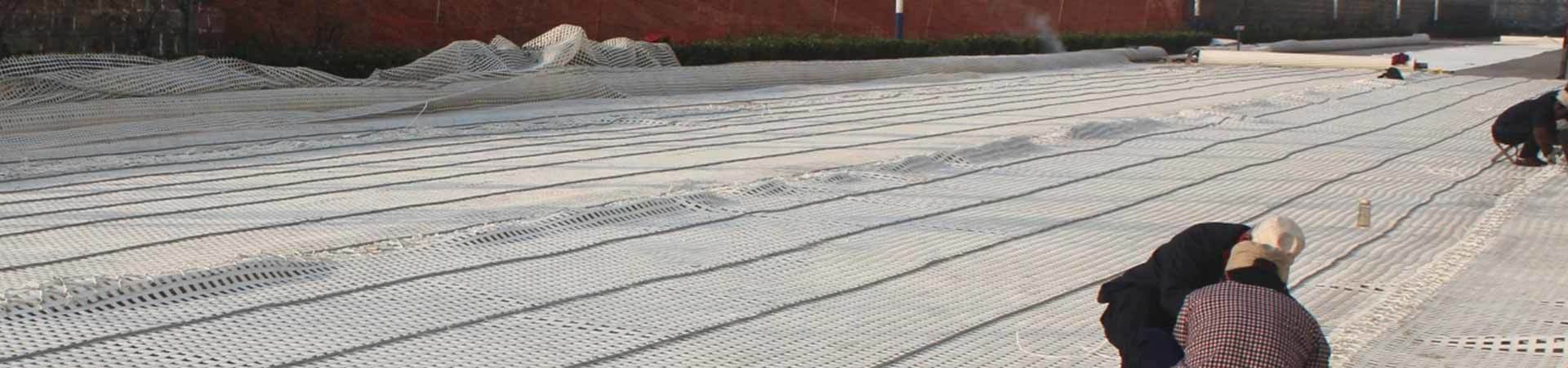
Key Importance of Fiberglass Geogrid in Construction - Boost Your Project's Performance!
Release Time:
2024-11-04

Fiberglass geogrid is a crucial material in construction projects, especially in soil reinforcement and stabilization. Its key role lies in providing high tensile strength and stiffness, which helps to improve the overall performance and longevity of the structure.
During construction, fiberglass geogrid is typically placed at the base of the soil to distribute the load more evenly and reduce the risk of settlement or deformation. Its high tensile strength allows it to effectively restrain lateral movement of soil particles, preventing potential sliding or buckling of the structure.
Furthermore, fiberglass geogrids are also resistant to corrosion, UV rays, and chemical degradation, making them suitable for long-term applications in various environmental conditions. This durability ensures that the structure remains stable and secure over time, reducing the need for costly maintenance and repairs.
In addition, the open grid structure of fiberglass geogrid allows for efficient interlocking with the soil particles, creating a reinforced composite material that can withstand higher loads and stresses. This enhanced soil-geogrid interaction increases the overall stability of the structure and improves its resistance to settlement and deformation.
Overall, the use of fiberglass geogrid in construction projects is essential for achieving optimal performance, durability, and safety. Its unique properties and benefits make it a key component in soil reinforcement and stabilization, ensuring the long-term success of the project. By incorporating fiberglass geogrid into the construction process, engineers and contractors can confidently create strong, reliable structures that meet the highest industry standards.
Related News
Our Main Products
Contact Us
Address:No. 366, Industrial Park North Road, Beijipo District, High-tech Zone, Taian City, Shandong Province,China
Get a Free Quote


