

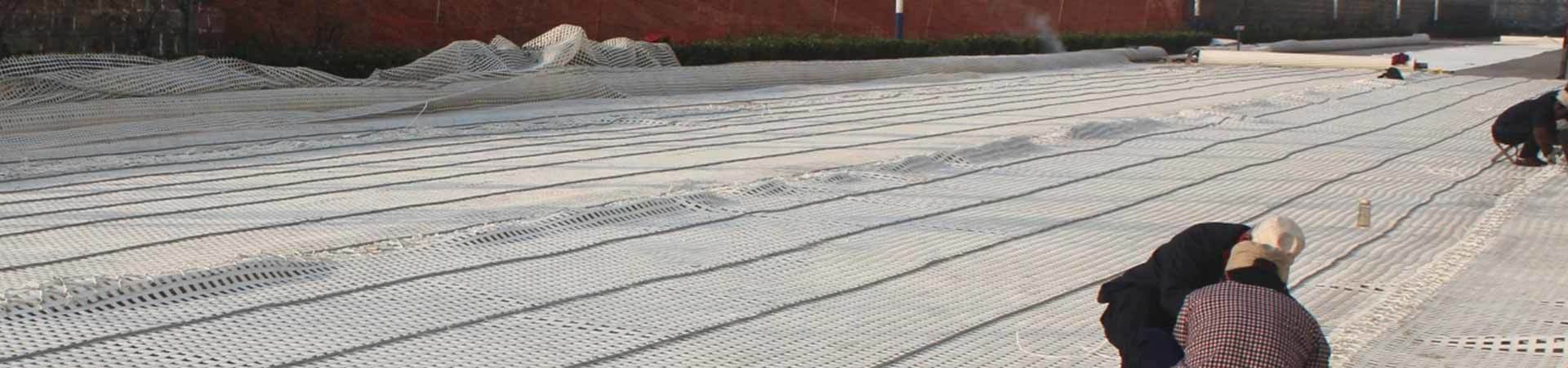
Textured Geomembrane versus smooth Geomembrane: What sets them apart?
Release Time:
2024-04-24

Texture geomembrane and smooth geomembrane are two common types of geomembranes used in various civil engineering and environmental protection projects. They both serve the purpose of providing impermeable barriers to prevent fluid or gas migration. However, there are some key differences between the two types that are important to consider when selecting the appropriate geomembrane for a specific application.
Texture geomembrane, as the name suggests, has a textured surface that provides enhanced frictional properties. This texture helps to increase the interface shear strength between the geomembrane and adjacent materials, such as soil or geotextiles. This makes texture geomembrane ideal for applications where slope stability and resistance to sliding are important factors, such as in landfill liners or reservoirs.
On the other hand, smooth geomembrane has a flat, smooth surface that offers low frictional properties. This type of geomembrane is typically used in applications where smoothness is required for ease of installation or where a slick surface is desired to facilitate fluid flow, such as in pond liners or floating covers.
In terms of durability and longevity, both texture and smooth geomembranes are manufactured with high-quality materials that are resistant to UV degradation, chemical exposure, and punctures. However, the choice between the two types will ultimately depend on the specific requirements of the project and the desired performance characteristics.
As a professional geomembrane supplier, we understand the importance of selecting the right geomembrane for your project. Our team of experts can provide guidance and recommendations based on your project requirements, ensuring that you get the most suitable geomembrane for optimal performance and longevity. Contact us today to learn more about our range of texture and smooth geomembranes and how we can help you with your next project.
Related News
Our Main Products
Contact Us
Address:No. 366, Industrial Park North Road, Beijipo District, High-tech Zone, Taian City, Shandong Province,China
Get a Free Quote


