

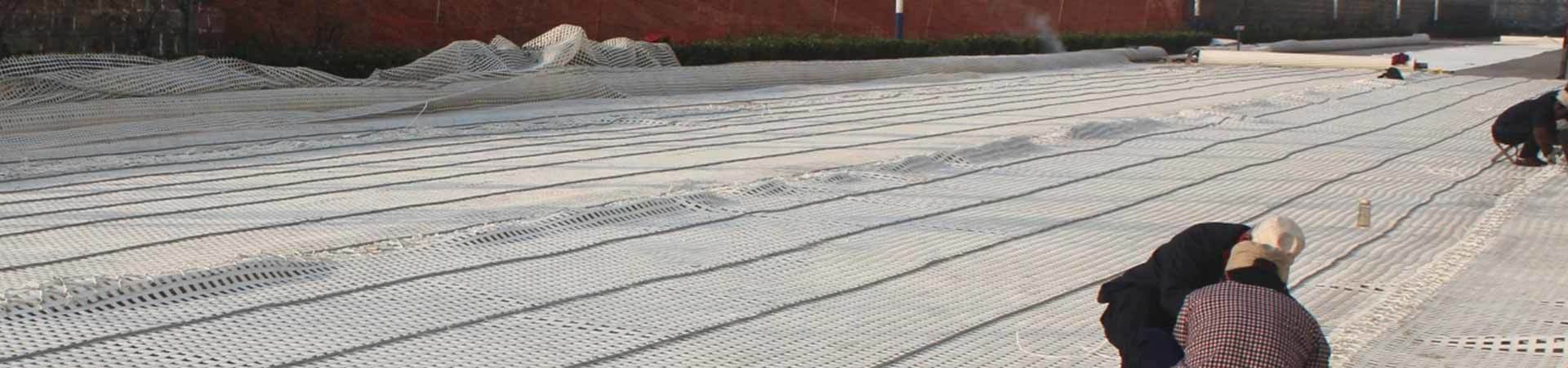
Exploring the key purpose and function of Triaxial geogrid
Release Time:
2024-09-30

Triaxial geogrids are widely used in civil engineering and construction projects for their ability to provide reinforcement, stabilization, and confinement to soil and other materials. These geogrids are composed of a network of interconnected ribs that form a three-dimensional structure, allowing them to distribute loads in multiple directions.
One of the main purposes of triaxial geogrids is to improve the strength and stability of soil structures. By placing these geogrids within soil layers, they can effectively distribute the applied loads and reduce the potential for settlement or deformation. This is particularly important in applications such as road construction, embankments, retaining walls, and landfills, where the soil must withstand heavy loads and environmental stresses.
Another key function of triaxial geogrids is to prevent the lateral spreading of soil and other materials. When placed horizontally between different soil layers, these geogrids act as a barrier that inhibits the movement of particles under lateral loads. This confinement effect can help to prevent slope failures, improve the performance of reinforced soil structures, and enhance the overall stability of the project.
In addition to reinforcement and confinement, triaxial geogrids also play a crucial role in filtration and drainage applications. The open spaces within the geogrid structure allow for the passage of water, preventing the buildup of hydrostatic pressure and promoting effective drainage. This helps to maintain the integrity of the soil layers, reduce the risk of erosion, and enhance the long-term performance of the project.
Overall, triaxial geogrids are versatile materials that offer a wide range of benefits in civil engineering and construction projects. Whether used for reinforcement, stabilization, confinement, filtration, or drainage, these geogrids are essential components that improve the strength, durability, and sustainability of various structures. With their proven performance and reliability, triaxial geogrids continue to be a preferred choice for engineers and contractors seeking effective solutions for challenging soil conditions and construction challenges.
Related News
Our Main Products
Contact Us
Address:No. 366, Industrial Park North Road, Beijipo District, High-tech Zone, Taian City, Shandong Province,China
Get a Free Quote


